Sam walked into the doctor's office complaining. "I'm not feeling so well. I feel torn. I am of two minds and am unable to decide which actions to take. This indecision has me in a state of gridlock. I couldn't balance my budget, resulting in a big hit to my credit score. I couldn't hold my tongue and find myself calling people who disagree with me crazy or ignorant or liars. I know I have to make some big changes to my life, but I just can't decide how to move forward. What's wrong with me, doc?"
The Institute for Emerging Issues asked me to come and diagnose Sam, also known as American democracy, at the Redesigning Democracy Summit.
After looking at her chart, I have come to the conclusion that the syndrome causing Sam's problem stem from a longstanding, untreated case of political segregation. Moralized migration patterns where liberals are moving to liberal enclaves and conservatives are moving to conservative enclaves lead to political segregation. People on the left literally have less contact with people on the right; and, people on the right literally have less contact with people on the right. When people do not have contact with members of other groups, it becomes much easier to think ill of them. As former Representative Jim Leach (R-IA) said, "it's a whole lot easier to call someone a dumb liar if you know you don't have to face that person's family over the dinner table later that day." With this political segregation, the norms of politeness and respect change, and may even be irrelevant for dealing with people of divergent political perspectives. So, politicos now face little repercussions for calling someone a liar, a fascist, a communist, or, in some cases, "the Anti-Christ." In some cases, this disrespect may benefit them and provide a boost to their fundraising.
Further complicating political segregation is that liberals and conservatives now live in communities that are very different from one another and face different problems. These different communities create different social realities for their inhabitants. For example, people living in more conservative rural farming towns have a dramatically different experience of the current economic downtown than people living in more liberal urban manufacturing cities. These diverse places suffer in unique ways and demand different remedies to their economic hardships. People in farming communities are unlikely to need extensions of unemployment benefits, as unemployment has not increased as much in these communities. Rather, they may need subsidies or tax breaks to help them cover the increased cost of fuel for the equipment on their farms. In contrast, urban liberals are unlikely to desire, or even see the relevance of, giving tax breaks to farmers in this time of economic turmoil. Rather, they may desire extensions of unemployment benefits to help people survive while they acquire skills needed for jobs of the future. Anyone advocating for one of these programs will be seen in a positive light by one of these communities and out-of-touch by the other community. Thus, it is no surprise that representatives of these communities cannot compromise to address the country's economic problems.
So, my diagnosis is that our political segregation is giving way to the growing incivility and partisan gridlock in America. It is natural for people to want to be around others who share their values, but if we are to address our most pressing issues and move America forward, we need to step outside of our comfort zone. You may not know many people who hold different values, but if you do, try talking with them with an open-mind; try to understand them, rather than just trying to persuade them to agree with you. Through this, you just might make a new friend who will help you to better understand the world around you. Oh, and over time, this may give way to a more pleasant America where people can disagree without demonizing each other, and where our government is less prone to gridlock.
Showing posts with label culture war. Show all posts
Showing posts with label culture war. Show all posts
Wednesday, December 12, 2012


Friday, August 17, 2012
Dirty Rats: How Feelings Drive Political Thinking
For a long time, people reasoned their way to the conclusion that they are rational beings who only make decisions after considering the pros and cons of each option. Over the past several decades, though, scientists have found limited support for this intuitive theory.
Rather, we have more immediate, gut-level emotional reactions to stimuli before we think about the stimuli's characteristics. Social psychologist Bob Zajonc demonstrated support for this hypothesis by flashing smiling or frowning faces on a computer screen faster than the human eye could notice and then asking people to rate how positive or negative Chinese ideographs were. Participants who rated ideographs after being subliminally primed with smiling faces evaluated the ideographs more positively than after being subliminally primed with the frowning faces.
Moral psychologist, and author of the New York Times bestseller The Righteous Mind: Why Good People are Divided by Politics and Religion, Jonathan Haidt conducted similar studies. Instead of priming people with frowning faces, he and his colleagues primed people to associate the feeling of disgust with different stimuli. Again, when people were primed with disgust, their evaluations became more negative. However, Haidt and colleagues went further. They found that negative feelings led to harsher moral judgments.
Machiavellian campaign strategists raise their eyebrows at findings like these. They see a potential tool to help win some votes. Perhaps strategists were aware of this body of research and design ads trying to get voters to associate negative things, like Rats, with opposition candidates, like Al Gore in 2000.
And, associating a violent criminal with Michael Dukakis in 1988. Or, associating nuclear war with Barry Goldwater in 1964.
It's not clear that any of these ads were effective (or not), but there is psychological evidence suggesting that they could lead voters to have more negative feelings towards the targeted candidate. Furthermore, it's not clear that some negative feelings associated with one candidate will do anything to change someone's preference in the voting booth.
At the Stanford Summer Institute in Political Psychology, political scientist Milt Lodge presented research addressing these very questions. In a series of studies, he and his colleagues subliminally primed participants with positive, negative, or neutral words (much like that in the Zajonc studies, and possibly similar to the Al Gore BureaucRATS ad) before asking participants to read a strong argument about a specific issue, and then later asked them to report their attitude on that issue.
When people were primed with the positive words, they evaluated the argument more favorably. If they agreed with the argument prior to the priming, they agreed even more after the priming. When people were primed with the negative words, they evaluated the argument less favorably. If they agreed with the argument prior to the priming, they agreed less after the priming. Furthermore, these subliminal primes had lasting effects, too, suggesting that commercials shown well before people ever get into a voting booth may affect their behavior once they do enter the voting booth.
So, what Machiavellians need to know from this work is that if they can just manipulate people's emotions so that they associate "good" with the people on Team Machiavelli and "bad" with all others, then they can win friends and influence people.
Wait. Not so fast. The manipulation of the sort used in the studies described here are of dubious legality. At present (August 17, 2012), there are no federal laws banning subliminal priming in advertisements in the United States, but there are a number of private-sector regulating bodies that prohibit it.
That doesn't mean you can't use this affective primacy principle to your advantage. It just means you need to be more creative. Consider adding a smiling face to your commercials, images from some widely loved cartoons (ahem!), and a few jokes at the beginning of any speeches you may be giving. Perhaps, you'll warm up your audience and use a basic component of your audience's psychology to help the presentation go a little more enjoyably for the both of you.
Tuesday, August 14, 2012
Does Democracy Cause Peace?
Democratic countries go to war less than their non-democratic counterparts.
Immanuel Kant proposed that countries ruled by the people would be reluctant to go to war, except in cases of self-defense, because the people know that they would be the ones who might die on the battlefield. Kant, continued, arguing that if all countries were ruled by the people, a "perpetual peace" would emerge and persist.
Later, Thomas Paine argued that autocratic countries would be more likely to go to war because kings feared that their legacies and pride were at stake. In countries ruled by the people, the people would prevent rulers from taking rash, violent action. This, Paine said, was Common Sense.
These ideas came to be called democratic peace theory and were assumed true for more than a century, before being put under the microscope by scientists in the 1960s.
In the first scientific study of democratic peace theory, Dean Babst calculated the probability that any two countries would declare war against each other. Then, he compared whether the countries he deemed democratic (places where citizens have choices between opposing parties and can vote at regular intervals for members of a legislature and executive branch) were less likely to go to war than non-democratic countries. He found that the overall probability of any two randomly selected countries would go to war was 8%. When looking only at the democratic countries and their historic declarations of war, he found ZERO pairs of democratic countries declaring war on each other. In other words, in this data set, there was 0% probability of democratic countries declaring war on each other.
This research provided evidence suggesting that democracy may cause peace. As with all research, though, there are a number of issues with this single study.
One of the biggest issues is that most of research on democratic peace theory relies on correlational historical reports. Correlation cannot demonstrate causation. It may be that democracy is not actually causing peace, but rather some other variables that tend to co-occur with democracy. For example, democracies tend to have higher gross domestic products per capita and stronger militaries. So, maybe rich countries are less violent. Or, maybe countries build strong militaries to deter others from wanting to fight with them.
Another issue with this research is that all of the data are at the nation-level and do not look at the psychology of the decision-makers who choose to enter conflicts (or not).
At the Summer Institute in Political Psychology, Stanford University Professor Michael Tomz reported findings from two experiments designed to get around the problems of the past studies of democratic peace theory that relied on the aggregated correlational data. In these studies, participants read short descriptions of different countries with key factors like gross domestic product, military strength, and how leaders gain power (elected or not) systematically varied so that they could look at how each of those variables uniquely affect their participants' perceptions. After reading about these countries, participants indicated their support for using military action against each of the countries. In support of democratic peace theory, people were less likely to attack the countries described as democratic, regardless of the country's other characteristics.
But, these data do not tell us the psychological mechanisms why people in democracies are less likely to support conflicts with other democracies. Thus, Tomz conducted another study in which he assessed people's perceptions of other fictitious countries that might be relevant in deciding to go to war with them. Specifically, he asked participants:
On the other hand, radical hawkish conservatives may take this evidence that democracies are more peaceful as a justification for going to war with autocratic regimes, thinking that will make those countries more peaceful in the future. Supporters of going to war with Iraq often made this argument. While the evidence seems to suggest democratic countries are less likely to go to war, trying to force a democracy upon a country may not be sufficient for it to really embrace democratic ideals.
In sum, democracy may not directly cause peace, but it can reduce how threatening people feel other countries are and how moral a war against other countries would be. There's still much research to be done on democratic peace theory, but the ever-improving methodological techniques used in the examination of it leads to increased confidence that democracy leads to a reduction in international conflict.
Immanuel Kant proposed that countries ruled by the people would be reluctant to go to war, except in cases of self-defense, because the people know that they would be the ones who might die on the battlefield. Kant, continued, arguing that if all countries were ruled by the people, a "perpetual peace" would emerge and persist.
Later, Thomas Paine argued that autocratic countries would be more likely to go to war because kings feared that their legacies and pride were at stake. In countries ruled by the people, the people would prevent rulers from taking rash, violent action. This, Paine said, was Common Sense.
These ideas came to be called democratic peace theory and were assumed true for more than a century, before being put under the microscope by scientists in the 1960s.
In the first scientific study of democratic peace theory, Dean Babst calculated the probability that any two countries would declare war against each other. Then, he compared whether the countries he deemed democratic (places where citizens have choices between opposing parties and can vote at regular intervals for members of a legislature and executive branch) were less likely to go to war than non-democratic countries. He found that the overall probability of any two randomly selected countries would go to war was 8%. When looking only at the democratic countries and their historic declarations of war, he found ZERO pairs of democratic countries declaring war on each other. In other words, in this data set, there was 0% probability of democratic countries declaring war on each other.
This research provided evidence suggesting that democracy may cause peace. As with all research, though, there are a number of issues with this single study.
One of the biggest issues is that most of research on democratic peace theory relies on correlational historical reports. Correlation cannot demonstrate causation. It may be that democracy is not actually causing peace, but rather some other variables that tend to co-occur with democracy. For example, democracies tend to have higher gross domestic products per capita and stronger militaries. So, maybe rich countries are less violent. Or, maybe countries build strong militaries to deter others from wanting to fight with them.
Another issue with this research is that all of the data are at the nation-level and do not look at the psychology of the decision-makers who choose to enter conflicts (or not).
At the Summer Institute in Political Psychology, Stanford University Professor Michael Tomz reported findings from two experiments designed to get around the problems of the past studies of democratic peace theory that relied on the aggregated correlational data. In these studies, participants read short descriptions of different countries with key factors like gross domestic product, military strength, and how leaders gain power (elected or not) systematically varied so that they could look at how each of those variables uniquely affect their participants' perceptions. After reading about these countries, participants indicated their support for using military action against each of the countries. In support of democratic peace theory, people were less likely to attack the countries described as democratic, regardless of the country's other characteristics.
But, these data do not tell us the psychological mechanisms why people in democracies are less likely to support conflicts with other democracies. Thus, Tomz conducted another study in which he assessed people's perceptions of other fictitious countries that might be relevant in deciding to go to war with them. Specifically, he asked participants:
- How threatening is the opponent?
- How costly would an armed conflict with the opponent be?
- What is the likelihood of success?
- Would it be moral to attack them?
Not surprisingly, people support war against threatening countries. And when war is expected to be less costly. And when there is a high probability of success. And, when war against a specific opponent would be moral.
Importantly, though, these perceptions eliminated the effect of democracy on support for peace. Specifically, people presume democratic countries to have more similar morals, be less threatening, and less likely to be successfully defeated. When examined individually, perceptions of threat and morality were most important in understanding the relationship between democracy and peace.
Radical dovish liberals may point to recent military endeavors led by the United States and its coalition of the willing and disagree with this assertion. If they can set aside their motivated reasoning, to reject information inconsistent with their desired conclusions (like, the idea that America is a war-mongering nation responsible for countless atrocities abroad and deserving of any horrible terror attacks it receives), they may see how democracies are typically less violent than their autocratic counterparts.
On the other hand, radical hawkish conservatives may take this evidence that democracies are more peaceful as a justification for going to war with autocratic regimes, thinking that will make those countries more peaceful in the future. Supporters of going to war with Iraq often made this argument. While the evidence seems to suggest democratic countries are less likely to go to war, trying to force a democracy upon a country may not be sufficient for it to really embrace democratic ideals.
In sum, democracy may not directly cause peace, but it can reduce how threatening people feel other countries are and how moral a war against other countries would be. There's still much research to be done on democratic peace theory, but the ever-improving methodological techniques used in the examination of it leads to increased confidence that democracy leads to a reduction in international conflict.
Tuesday, July 31, 2012
Why do Islamic Terrorists Hate Us? Rose McDermott's Unique Perspective
After 9/11, Al Gore called together a number of scientists who might be able to help him understand "why they hate us?" Generally, scholars believe that terrorism is driven by collective humiliation, a sense of disrespect, and existential desires to defend one's way of life. One scholar, however, presented a dramatically different perspective.
When Rose McDermott's advisor Richard Wrangham was asked "Why do they hate us?" He responded: "Polygamy... specifically polygyny." (Polygyny is a form of polygamy where one man has many wives.)
To support this argument in her presentation at the Stanford Summer Institute in Political Psychology, McDermott presented an immense quantity of correlational data. She showed correlations between the proportion of single males to females in a society (which is high in polygynous countries as many women are monopolized by a a few men, leaving many men single) and the rate of violent crimes against women, gang membership, and support for aggressive militarism, presumably all in pursuit of finding women to pass one's genes onto subsequent generations. Further, she shows relationships between polygyny and proportions of terrorists coming from those countries. Ergo, polygyny causes terrorism and causes polygynous countries, like many of those in the Middle East to hate the United States, right?
Not so fast, my friends. (* this is my personal opinion; not Rose McDermott's; I find this argument to be unconvincing *)
Correlation does not imply causation. It may be unfeasible to experimentally manipulate the legality and prevalence of polygyny in different cultures, but there are ways to strengthen a claim. When claims are as radical as this one, it is especially important to stand on firm empirical ground. In order to claim that polygyny causes terrorism, it'd be useful to conduct cross-cultural, cross-historical analyses and test whether societies become less violent as the prevalence of polygyny decreases. The converse should also be tested; do societies also become more violent as the prevalence of polygyny increases?
This all assumes that the factor driving violence is polygyny, but that is a big assumption. Polygyny tends to be higher in non-western, poorer, more religious, and less educated societies. In order to defend the claim that polygyny is the driving factor, these variables should be assessed in tandem with the prevalence of polygyny; they should not simply be "statistically controlled for." Much research (for example, see Rothschild's research) shows that religious fundamentalism drives support for violent action against other cultures. Other work suggests that perhaps relative economic deprivation drives disorder and increased rates of violence (for example, see Broken Windows Theory, and some of my own research). If religious belief and these other factors lead to differing rates of polygyny, then a fundamental statistical assumption of these tests is violated and artificially distort the results, potentially rendering them meaningless (for fellow stats geeks, this violation is known as heterogeneity of regression slopes). If these variables were included in the model as factors, then we could get a better sense of the unique relationship between polygyny and violence.
Still. Even if these more comprehensive techniques were adopted, these data are correlational and incapable of demonstrating a causal relationship. Again, this is my critique, not hers. At the end of McDermott's lecture when I asked what we could do to reduce worldwide terrorism, her response was, "Ban polygyny."
She remarked that Al Gore sent letters of gratitude to 11 of the 12 attendees of the conference he organized following 9/11. The one person who did not get a letter of gratitude was Rose McDermott's advisor Richard Wrangham. Later in the week, I asked terrorism scholar Jerrold Post if Gore was wrong in not sending a letter of gratitude for Wrangham and McDermott's theory of terrorism. He shook his head and said he had "no knowledge of any link between sex and terrorism."
What do you think?
When Rose McDermott's advisor Richard Wrangham was asked "Why do they hate us?" He responded: "Polygamy... specifically polygyny." (Polygyny is a form of polygamy where one man has many wives.)
To support this argument in her presentation at the Stanford Summer Institute in Political Psychology, McDermott presented an immense quantity of correlational data. She showed correlations between the proportion of single males to females in a society (which is high in polygynous countries as many women are monopolized by a a few men, leaving many men single) and the rate of violent crimes against women, gang membership, and support for aggressive militarism, presumably all in pursuit of finding women to pass one's genes onto subsequent generations. Further, she shows relationships between polygyny and proportions of terrorists coming from those countries. Ergo, polygyny causes terrorism and causes polygynous countries, like many of those in the Middle East to hate the United States, right?
Not so fast, my friends. (* this is my personal opinion; not Rose McDermott's; I find this argument to be unconvincing *)
Correlation does not imply causation. It may be unfeasible to experimentally manipulate the legality and prevalence of polygyny in different cultures, but there are ways to strengthen a claim. When claims are as radical as this one, it is especially important to stand on firm empirical ground. In order to claim that polygyny causes terrorism, it'd be useful to conduct cross-cultural, cross-historical analyses and test whether societies become less violent as the prevalence of polygyny decreases. The converse should also be tested; do societies also become more violent as the prevalence of polygyny increases?
This all assumes that the factor driving violence is polygyny, but that is a big assumption. Polygyny tends to be higher in non-western, poorer, more religious, and less educated societies. In order to defend the claim that polygyny is the driving factor, these variables should be assessed in tandem with the prevalence of polygyny; they should not simply be "statistically controlled for." Much research (for example, see Rothschild's research) shows that religious fundamentalism drives support for violent action against other cultures. Other work suggests that perhaps relative economic deprivation drives disorder and increased rates of violence (for example, see Broken Windows Theory, and some of my own research). If religious belief and these other factors lead to differing rates of polygyny, then a fundamental statistical assumption of these tests is violated and artificially distort the results, potentially rendering them meaningless (for fellow stats geeks, this violation is known as heterogeneity of regression slopes). If these variables were included in the model as factors, then we could get a better sense of the unique relationship between polygyny and violence.
Still. Even if these more comprehensive techniques were adopted, these data are correlational and incapable of demonstrating a causal relationship. Again, this is my critique, not hers. At the end of McDermott's lecture when I asked what we could do to reduce worldwide terrorism, her response was, "Ban polygyny."
She remarked that Al Gore sent letters of gratitude to 11 of the 12 attendees of the conference he organized following 9/11. The one person who did not get a letter of gratitude was Rose McDermott's advisor Richard Wrangham. Later in the week, I asked terrorism scholar Jerrold Post if Gore was wrong in not sending a letter of gratitude for Wrangham and McDermott's theory of terrorism. He shook his head and said he had "no knowledge of any link between sex and terrorism."
What do you think?
Saturday, July 28, 2012
Relationships Come First: Insight from the Citizens’ Civility Symposium
The Institute for Civility in Government's Citizens' Civility Symposium brought together people of all political persuasions to discuss the political process--quite civilly, I am pleased to report. While many attendees held different positions on the issues, we came to a consensus that debate in a free democratic republic should be civil.
As the invited guests spoke, they shared stories of how they had been victims of America's civility deficit. Former House Representative Bill Archer (R-TX) spoke of how Bob Novak called him a communist on the adversarial political news show, Crossfire. Rep. Archer continued by mentioning how a fellow congressperson had called him "Hitler" and a "Nazi" on the House floor.
Former House Representative Jim Leach (R-IA) shared similar stories including one where he was called a "Fascist" and a "Communist…" by the same person… in the same sentence. Apparently, the irony was lost on the uncivil politico using those epithets, since fascism is typically associated with the far-right and communism is typically associated with the far-left.
Current House Representative Henry Cuellar (D-TX) shared his surprise at how soon Democrats and Republicans are segregated once they are elected to office. As they prepare to begin their careers in Washington, D. C., all new congresspeople are invited to attend workshops orienting them to their new jobs. As Rep. Cuellar walked onto one of the buses that would take the newly-elected officials to the orientation, the bus grew silent. Someone stood up and informed him he was on the "wrong bus" and wasn't "wanted there," a scenario reminiscent of the 1960s civil rights' era. It turns out that was the "Republican" bus and that the parties do not intermingle in the orientation process. This experience led Rep. Cuellar to suggest that civility in politics is, in large part, a function of the relationships politicians form with one another. In recent years, the number of congresspeople living in D.C. has decreased, making it more difficult for them to interact and develop personal relationships.
Years of research document the many effects that this segregation may have on inter-party interactions. For example, Allport (1954) suggested that interacting with people who belong to different groups can sometimes reduce hostility and promote cooperation between groups. More recent research by Bandura (1999) and Haslam (2006) indicates that when people do not develop personal relationships with outgroup members, they are inclined to demonize and dehumanize the members of those other groups. Perhaps this explains why liberals often depicted President Bush as primate-like, and conservatives currently depict President Obama as primate-like. This reduced contact may predispose elected officials to use demonizing language “targeting” political opponents, labeling them “Fascists” and “Communists.”
The Institute created a civil public square for an afternoon, where shared experiences allowed people with very different political backgrounds to bond and recognize that we, as Americans, benefit from listening to each other’s perspectives. My mission with my colleagues at CivilPolitics.org is to find ways to encourage the growth of this civil public square.
As the invited guests spoke, they shared stories of how they had been victims of America's civility deficit. Former House Representative Bill Archer (R-TX) spoke of how Bob Novak called him a communist on the adversarial political news show, Crossfire. Rep. Archer continued by mentioning how a fellow congressperson had called him "Hitler" and a "Nazi" on the House floor.
Former House Representative Jim Leach (R-IA) shared similar stories including one where he was called a "Fascist" and a "Communist…" by the same person… in the same sentence. Apparently, the irony was lost on the uncivil politico using those epithets, since fascism is typically associated with the far-right and communism is typically associated with the far-left.
Current House Representative Henry Cuellar (D-TX) shared his surprise at how soon Democrats and Republicans are segregated once they are elected to office. As they prepare to begin their careers in Washington, D. C., all new congresspeople are invited to attend workshops orienting them to their new jobs. As Rep. Cuellar walked onto one of the buses that would take the newly-elected officials to the orientation, the bus grew silent. Someone stood up and informed him he was on the "wrong bus" and wasn't "wanted there," a scenario reminiscent of the 1960s civil rights' era. It turns out that was the "Republican" bus and that the parties do not intermingle in the orientation process. This experience led Rep. Cuellar to suggest that civility in politics is, in large part, a function of the relationships politicians form with one another. In recent years, the number of congresspeople living in D.C. has decreased, making it more difficult for them to interact and develop personal relationships.
Years of research document the many effects that this segregation may have on inter-party interactions. For example, Allport (1954) suggested that interacting with people who belong to different groups can sometimes reduce hostility and promote cooperation between groups. More recent research by Bandura (1999) and Haslam (2006) indicates that when people do not develop personal relationships with outgroup members, they are inclined to demonize and dehumanize the members of those other groups. Perhaps this explains why liberals often depicted President Bush as primate-like, and conservatives currently depict President Obama as primate-like. This reduced contact may predispose elected officials to use demonizing language “targeting” political opponents, labeling them “Fascists” and “Communists.”
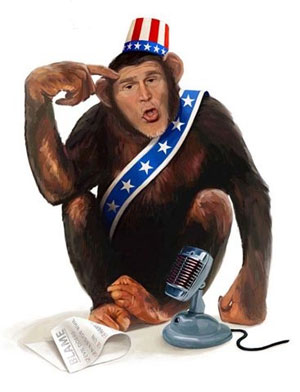
The Institute created a civil public square for an afternoon, where shared experiences allowed people with very different political backgrounds to bond and recognize that we, as Americans, benefit from listening to each other’s perspectives. My mission with my colleagues at CivilPolitics.org is to find ways to encourage the growth of this civil public square.
Perceptions of Civility in America
A recent Zogby International poll found that 95% of Americans believe that civility is important for a healthy democracy and that citizens are "turned off" when politics become "rude and nasty." With these alarming numbers, it is no surprise that three out of four Americans believe that, "Right now, Washington is broken." This bipartisan agreement on the incivility afflicting today's politics leads us to two questions:
1) Who is being blamed for this incivility? Our data at YourMorals.org suggest that liberals are, not surprisingly, more likely to blame the Republican Party than moderates or conservatives are. However and possibly more importantly, we see that many liberals, moderates, and conservatives believe both parties are at fault. In other words, people across the political spectrum are willing to admit that people in their own parties are somewhat at fault. To paraphrase T. S. Eliot and allude to the addiction treatment program slogan, let's hope that "acceptance is the first step to recovery."

2) What can people do to help bring civility back into American politics? A KRC Research polldemonstrates that 87% of those questioned believe that the general American public is responsible for improving civility. A full 85% of Democrats and Republicans believe that one action they could take to foster more civility is by voting against candidates who are uncivil. Between two-thirds and three-fourths of those surveyed also suggested that they, as consumers, could stop buying products from companies that promote hostile political discussions or display uncivil advertising. These poll numbers showing that people believe they can bring about civility by their own actions are encouraging, but should be taken with a grain of salt. Social psychological research informs us that attitudes are not always very good predictors of people’s behavior. This finding may partially explain the "Bradley Effect," which theorizes that people inaccurately respond to questions in ways that seem more socially desirable, yet still behave in less socially desirable ways. Might people simply be saying they desire civility while stoking the flames of incivility? Let's hope not.
Political Mavericks: Conscientious or Treasonous?
In James Thurber’s Further Fables for Our Time, he writes the tale of “The Peacelike Mongoose.”
Consider Democrats’ reactions to Sen. Joe Lieberman (I-CT) running for office as an Independent after losing the Democratic Primary. Former Clinton adviser Paul Begala nicknamed him “Traitor Joe,”journalist Ari Berman described him as a “back stabber,” and television show host Rachel Maddow proclaimed him to be a “wrench in the works.” On the other side of the aisle, though, Republicans celebrated Lieberman as “a really exceptional senator” and “a national treasure.” Conservative pundits Rush Limbaugh, Sean Hannity, and Glenn Beck all supported his candidacy for the U.S. Senate. Similarly, consider Republicans’ reactions to Sen. Olympia Snowe (R-ME) after she voted in favor of the 2009 stimulus package and the Senate Finance Committee’s healthcare reform bill. Republicans lambasted her as one of three then-Republican Senators who did not vote the party line as the “Traitor Trio”. At the same time, Democrats heralded Snowe for her willingness to compromise and leadership in doing what is best for the country.
Social psychologist Pete Ditto and graduate student Andrew Mastronarde published experimental evidence supporting this phenomenon in the Journal of Experimental Social Psychology. Across three studies, they found that although participants generally liked the idea of a political maverick, participants viewed mavericks of their own party more negatively than their party-line counterparts. Perhaps this is part of the reason that the long-self-pronounced political maverick Sen. John McCain (R-AZ) is now renouncing the idea that he ever was a maverick.
From ashes to ashes, and clay to clay, if the other party doesn’t get you, extremists within your own party may.
-- Matt Motyl
This fable was written denouncing the McCarthyist paranoia that led to the blacklisting of fellow American citizens out of suspicion that they may be communist sympathizers, but the message of this tale extends well beyond the Red Scare. Today, we see that “maverick” (or, perhaps, “mongoose”) politicians who do not vote the party line are often ostracized as “black sheep” and attacked by their own folks, as Thurber suggests.In cobra country a mongoose was born one day who didn't want to fight cobras or anything else. The word spread from mongoose to mongoose that there was a mongoose who didn't want to fight cobras. If he didn't want to fight anything else, it was his own business, but it was the duty of every mongoose to kill cobras or be killed by cobras.""Why?" asked the peacelike mongoose, and the word went around that the strange new mongoose was not only pro-cobra and anti-mongoose but intellectually curious and against the ideals and traditions of mongoosism."He is crazy," cried the young mongoose's father."He is sick," said his mother."He is a coward," shouted his brothers."He is a mongoosexual," whispered his sisters.Strangers who had never laid eyes on the peacelike mongoose remembered that they had seen him crawling on his stomach, or trying on cobra hoods, or plotting the violent overthrow of Mongoosia."I am trying to use reason and intelligence," said the strange new mongoose."Reason is six-sevenths of treason," said one of his neighbors."Intelligence is what the enemy uses," said another.Finally, the rumor spread that the mongoose had venom in his sting, like a cobra, and he was tried, convicted by a show of paws, and condemned to banishment.Moral: Ashes to ashes, and clay to clay, if the enemy doesn't get you your own folks may.
Consider Democrats’ reactions to Sen. Joe Lieberman (I-CT) running for office as an Independent after losing the Democratic Primary. Former Clinton adviser Paul Begala nicknamed him “Traitor Joe,”journalist Ari Berman described him as a “back stabber,” and television show host Rachel Maddow proclaimed him to be a “wrench in the works.” On the other side of the aisle, though, Republicans celebrated Lieberman as “a really exceptional senator” and “a national treasure.” Conservative pundits Rush Limbaugh, Sean Hannity, and Glenn Beck all supported his candidacy for the U.S. Senate. Similarly, consider Republicans’ reactions to Sen. Olympia Snowe (R-ME) after she voted in favor of the 2009 stimulus package and the Senate Finance Committee’s healthcare reform bill. Republicans lambasted her as one of three then-Republican Senators who did not vote the party line as the “Traitor Trio”. At the same time, Democrats heralded Snowe for her willingness to compromise and leadership in doing what is best for the country.
Social psychologist Pete Ditto and graduate student Andrew Mastronarde published experimental evidence supporting this phenomenon in the Journal of Experimental Social Psychology. Across three studies, they found that although participants generally liked the idea of a political maverick, participants viewed mavericks of their own party more negatively than their party-line counterparts. Perhaps this is part of the reason that the long-self-pronounced political maverick Sen. John McCain (R-AZ) is now renouncing the idea that he ever was a maverick.
From ashes to ashes, and clay to clay, if the other party doesn’t get you, extremists within your own party may.
-- Matt Motyl
Subscribe to:
Posts (Atom)